Two challenges are front of mind heading to the Partners for a New Economy gathering in Bonn.
- First is reaffirming that new economics – moving beyond GDP to economies centred on people and thereby the planet – really needs to get “manifesto ready,” especially with the UK general election close (or very close) with a multi-party outcome a real possibility. Read more on that here.
- Second stems from the article title: when thinking about the “what” and “how” of economic systems change, one way of approaching potential tipping points might include the innovation “S-curve,” typically used to chart and analyse the diffusion of technology and other innovations. From that curve, we then move to asking: what is the critical mass needed for a new economic system, and how do we get there? An evolution of the original Critical Mass for Sustainability Founding Statement.
TL; DR: The looking backwards bit
In 2023, Critical Mass for Sustainability asked: what is the critical mass for sustainability – environmentally, socially, and economically – and how do we get there? What positive tipping points do we aim for?
The positive tipping point field has come on so much in recent years, not least out of the University of Exeter; here is their home for systems change research and advocacy.
Then transition planning and businesses triggering systems change became our call for systems change: transition planning – including in regulation – for the largest companies and financial organisations that govern how industries and systems operate.
When we moved to combining systems change, transition planning, and sustainability, it was economic systems change that became the guiding point… from which other forms of industrial and technological systems change flow from. The starting points for roadmaps to a UK wellbeing economy were laid out and eventually the call for manifesto-ready plans.
I still don’t have what I’d need to communicate the transition to a new economy
There are plenty of excellent reports – excellent long reports – trying to get us toward an implementation mindset and plan… but they can’t quite find the right level of clarity. Often the innovation, detail, and evidence is incredible but the overarching message, takeaways, and direction is convoluted. We collectively haven’t perfected the phrase, sentence, paragraph, one page plan, and long-form manifesto that many in the movement want to put front and centre in their advocacy.
At risk of oversimplifying, there will always be a need to tailor economic plans to local and national circumstances. But that doesn’t mean it’s beyond our capability to come up with a step by step roadmap at the right level of detail and flexibility. A plan that we can argue for and defend strongly enough to leave the exact detail to those who therein have the time and space to implement it. It’s all there. We don’t need to redefine much. We just need to nail that overarching story, transition plan, and embed it in our campaigns and policy. Building that critical mass…
Can we use the S-curve to better understand the path to economic systems change?
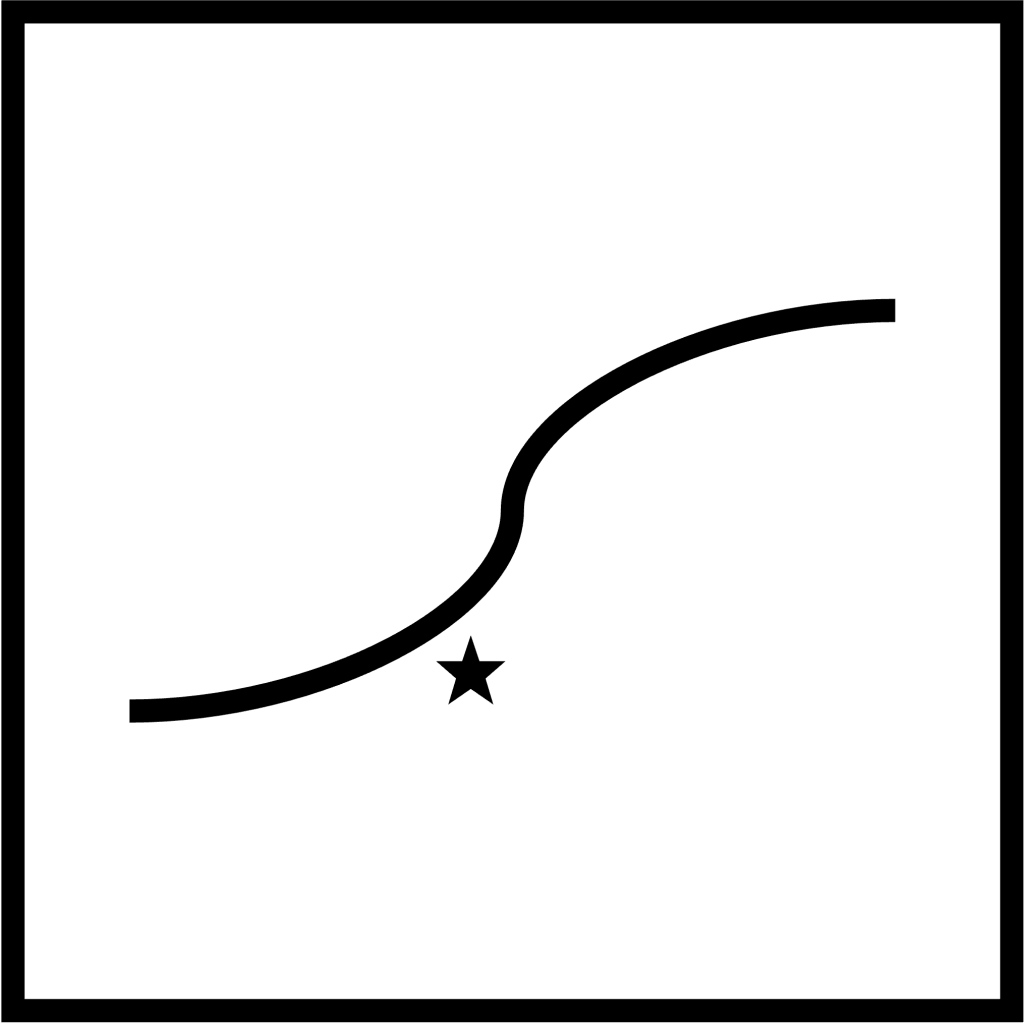
The S-curve (excuse my haphazard graphic above) typically looks at market shaping and innovation – mapping the diffusion and adoption of innovations – usually emerging technology.
So what would an S-curve path to economic systems change look like?
- Build the critical mass of ideas, proof, and plans – becoming the accepted idea that we move beyond GDP – where the initial stages of the plan are shown to work even under the current rules and systems. The parallel to sustainability would be getting environmental, social, and economic factors to work together.
- Scale up and implementation.
- Steady state.
This needs a lot more work. And coming back from Bonn, hopefully with fresh inspiration and partnerships, I’ll be working with people and organisations inside and outside both the new economy movement and the political space to continue outlining a roadmap and building critical mass in my own spheres of influence.
A few questions and milestones that will form the next steps…
- Concept agreement for moving beyond GDP: within, outside, and between political parties. Is it time for a UK-wide Wellbeing Act?
- “What about the bond markets?” and meeting other key challenges whose answers must be woven into a plan.
- What are the measures to focus a manifesto on? Do we, for example, adopt the new UN Beyond GDP framework at a country level? Even when considering local government?
- Constructing the roadmap: answering what level of detail is right for that plan at each stage? How much should be left to principles a frameworks that adapt in real time? How much of a plan involves concrete steps?
- Adapting Treasury/Finance Ministry rules: including to allow better investment in prevention – into wellbeing, a social platform, and the environment.
- What tax and in what order: how do we finance and phase in the beginning of a plan to get over the inertia to systems change? How does that evolve?
- Building a sovereign wealth fund in the UK: could that be based on taxes on the “new commons” like emissions, data, and nature? Opening up more discussion on universal dividends, services, and basic income… and all their potential variations
- Participation: citizens assemblies and real-time participation in democracy – including as part of the roadmap to shaping a new economic system.
- Economic tipping points: What are the historical examples of economic critical mass? Can we learn from them as part of the new economy movement?
Please do get in touch if you see yourselves joining different strands to this work!
In the UK there feels like a major opportunity to win the argument and prove it’s possible to build consensus around a new economy: one that creates a platform for everyone to thrive and live their unique versions of best lives. A platform built on a flourishing environment.
That opportunity must connect with similar opportunities around the world. Bonn is exactly the kind of initiative that makes that happen.
I can’t wait to see what’s next. But next needs to be soon.


Leave a Reply